



Cappellaro research photo

Spotlight on NSE Young Faculty: Prof. Paola Cappellaro

With continual improvements in numerical algorithms and hardware performance, modeling and simulation is gaining attention as a way to improve design and reduce cost in all scientific fields. Prof. Benoit Forget’s research group is focusing on improving current nuclear reactor simulation techniques and on the investigation of new modeling approaches more suitable to the modeling of next generation nuclear reactors.

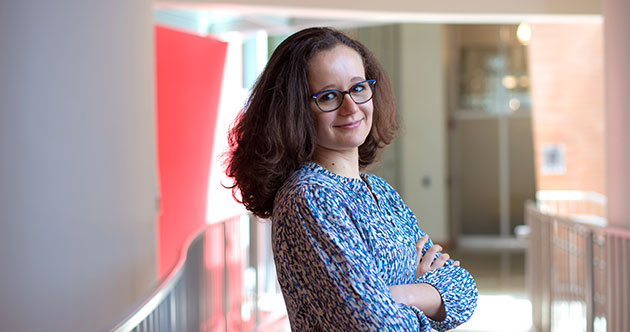
Cappellaro research photo

Spotlight on NSE Young Faculty: Prof. Paola Cappellaro

Professor Paola Cappellaro's research focuses on the study of few-body quantum systems and their use in quantum information processing. The goals are the realization of practical devices as well as the acquisition of a deeper knowledge of specific quantum systems and their environment. These ideas will be explored experimentally using Nitrogen-Vacancy centers in diamond. The strength of this system is in a hybrid approach that combines quantum optics, mesoscopic physics, andmagnetic resonance.

Jasanoff research photo

Spotlight on NSE Young Faculty: Prof. Alan Jasanoff

Genetically encoded molecular sensors detectable by MRI could reveal precise information about cellular processes noninvasively in live animals. In a recent study, Professor Alan Jasanoff's lab developed a prototype sensor for protein kinase activity (a key step in intracellular signal transduction) based on the genetically encodable protein ferritin. Next steps include expressing the sensor components inside cells, and applying the design to sense additional cellular targets.

Buongiorno research photo

Spotlight on NSE Young Faculty: Prof. Jacopo Buongiorno

By seeding the nuclear reactor coolant with nanoparticles it is possible to enhance the rate at which energy is removed from the nuclear fuel under normal and accident conditions, thus improving the reactor's economic and safety performance. The resulting particle-fluid system is called a 'nanofluid'. At MIT we study the heat transfer and colloidal behavior of nanofluids, including boiling and quenching, resistance to nuclear irradiation, and long-term stability. This is a collaboration between NSE (Prof. Jacopo Buongiorno, Dr. Tom McKrell) and the Nuclear Reactor Laboratory (Dr. Lin-wen Hu).

Yildiz research photo

Spotlight on NSE Young Faculty: Prof. Bilge Yildiz

Perovskite-type mixed ionic-electronic conductors are used as solid oxide fuel and electrolytic cell cathodes, and their surface structure plays an important role in the electrocatalytic activity for oxygen reduction and evolution. An improved understanding of the surface electronic and chemical state at the atomistic level is essential to the design of cathodes with enhanced electrocatalytic activity. Using in situ scanning tunnelingmicroscopy/spectroscopy (STM/STS) at high temperatures for the first time, Professor Yildiz's group found a correlation between the composition and electronic tunneling conductance on the cathode surface; important for the efficiency of these energy conversion devices. Results of this work are published in Applied Physics Letters.